Skip to content
Tempest Tactics

SIM-CT · Built on Unity 6

Combat Tactics Simulator

The Tempest Tactics Combat Tactics Simulator is a scenario-based tactical training simulator for individual and team drills, from range work to defensive positions, room entry and hostage situations.

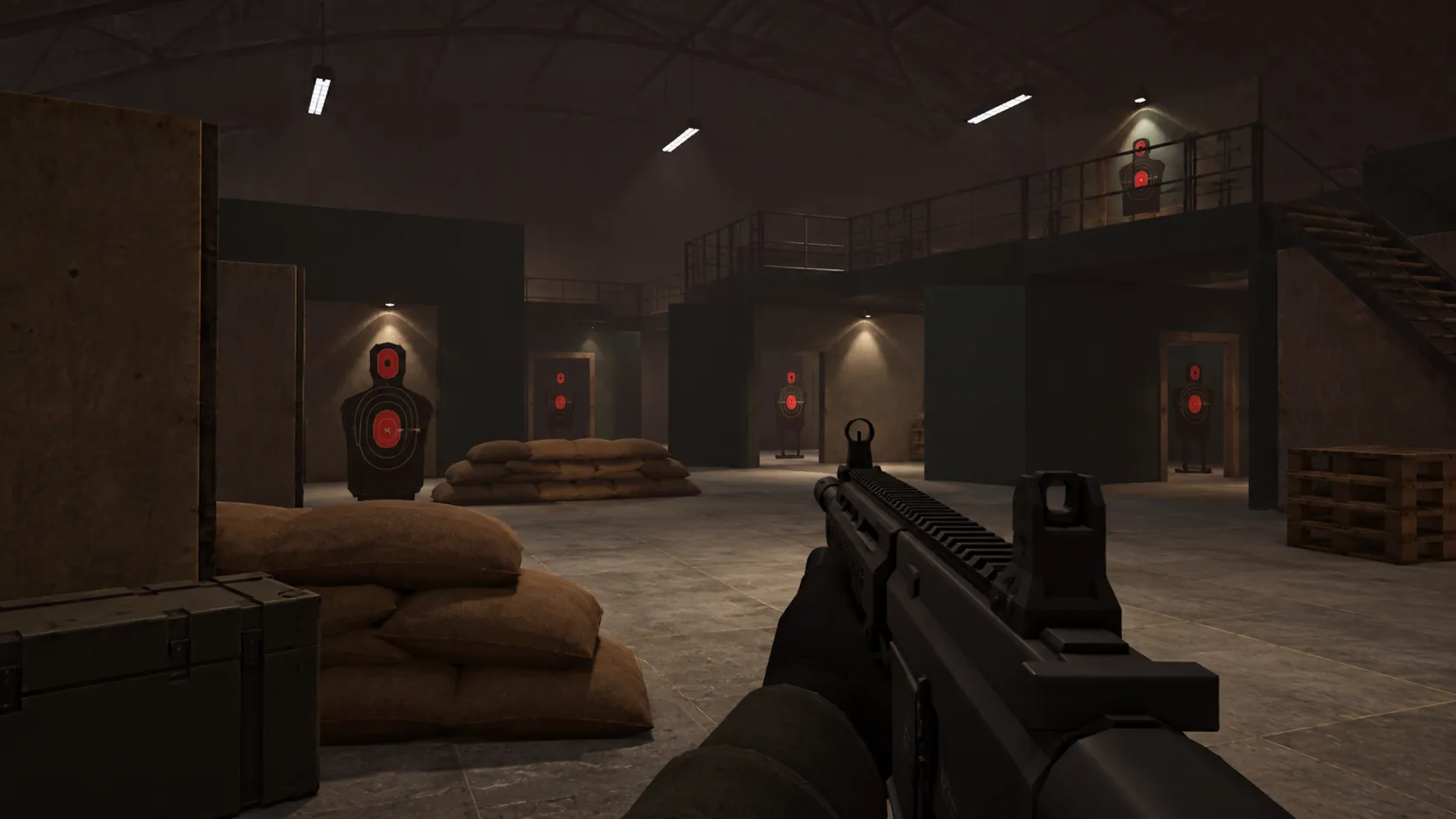
First-person view of an indoor simulated range with targets and sandbag positions.
Indoor range for fundamentals and drills. · In-simulator screenshot
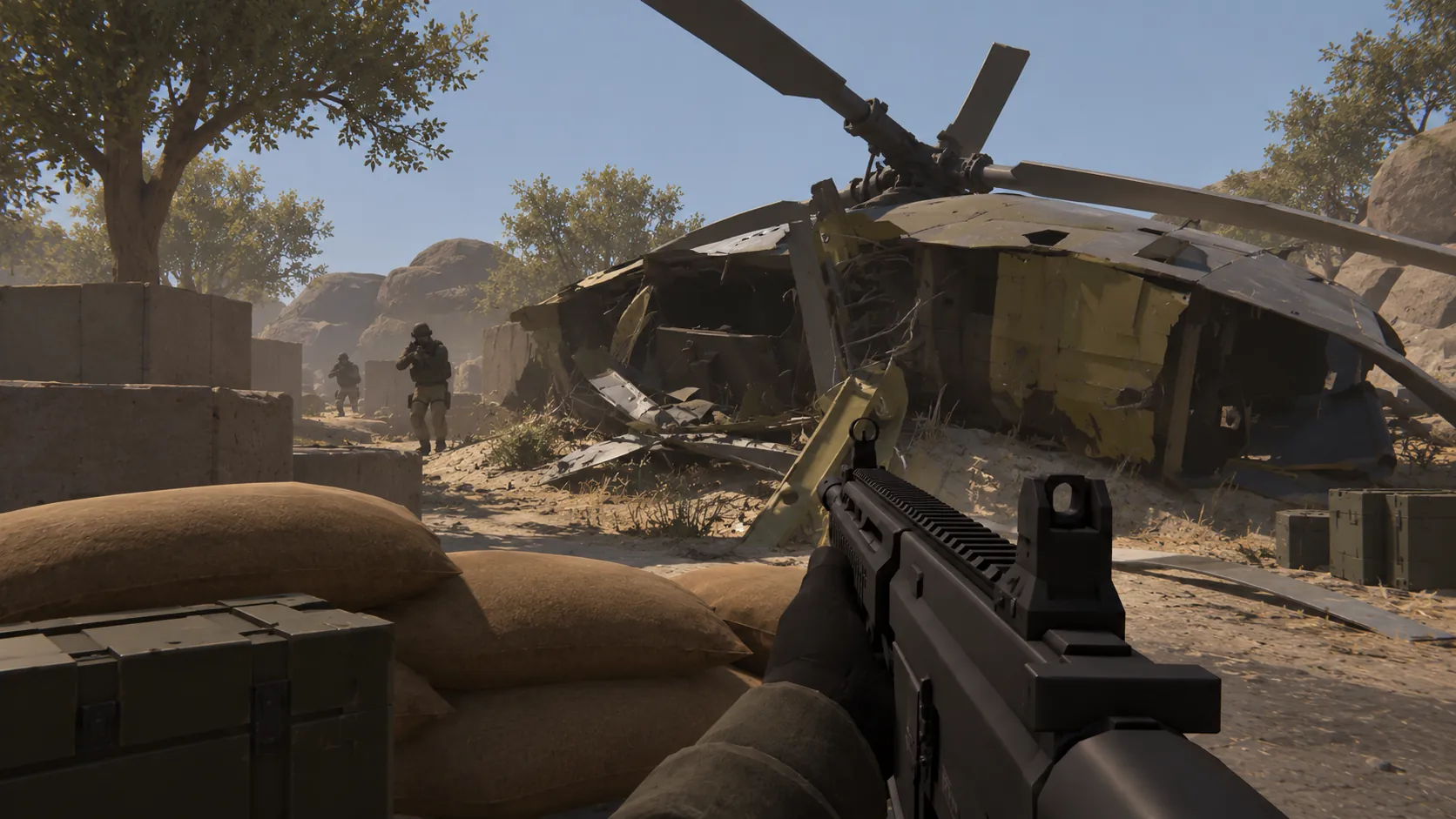
  • First-person view from behind sandbags at a desert defensive position, with a downed helicopter and approaching figures.
    Holding a defensive position.
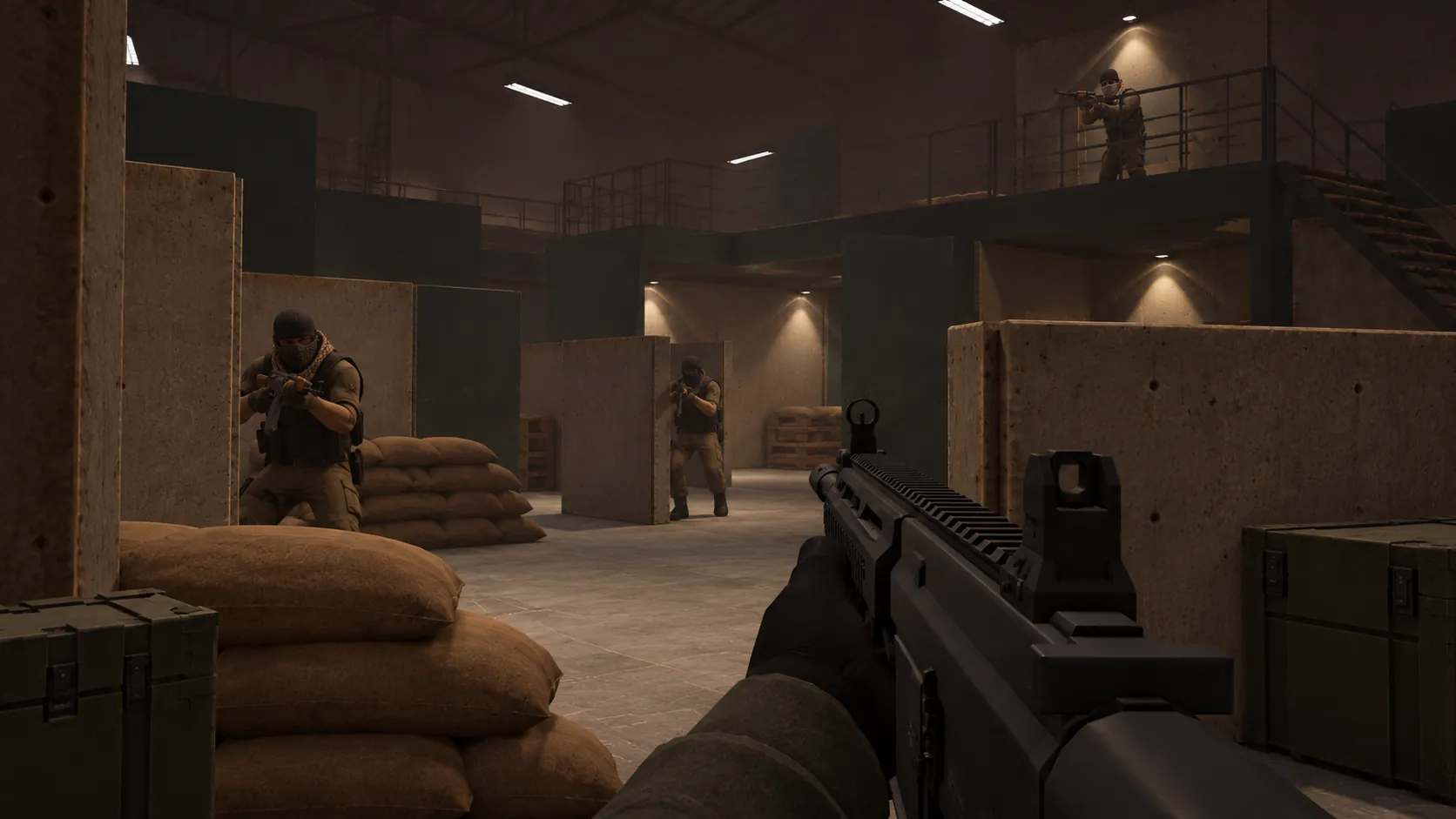
  • First-person view of an assault through an indoor facility with simulated opposing actors.
    Assault through a structured facility.
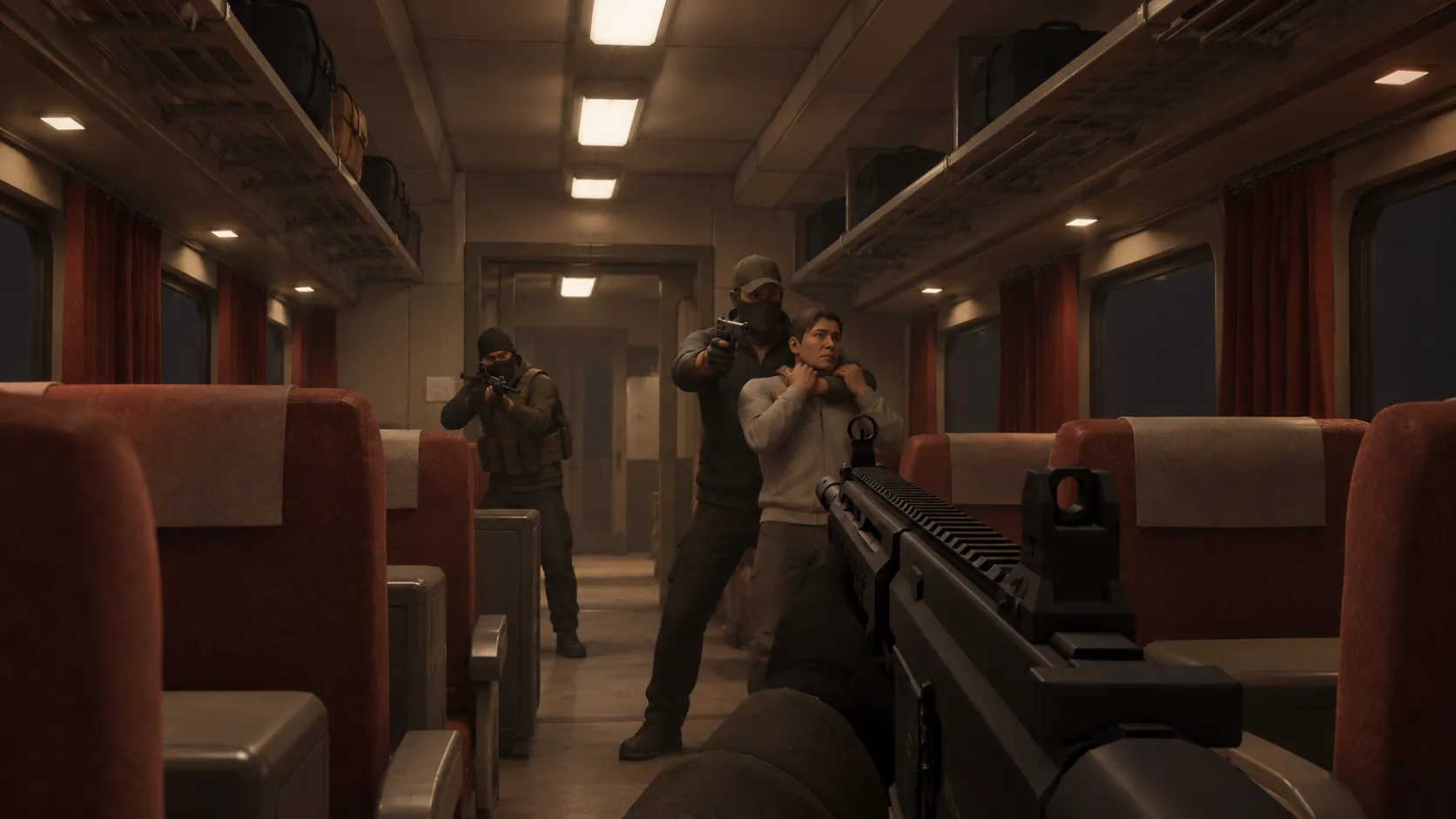
  • First-person view inside a train carriage where an armed subject holds a hostage.
    Hostage situation inside a train carriage.

Training scenarios

What trainees practise

Scenarios can vary conditions, actors and events between runs, so the same environment presents a different problem each time.

  1. 01

    Range and fundamentals

    Repeatable drills in an indoor range before moving to full scenarios.

  2. 02

    Defensive position

    Hold a position as the situation around it develops.

  3. 03

    Assault and room entry

    Move through structures with simulated actors whose behaviour can change.

  4. 04

    Hostage situation

    Decide under pressure in confined spaces such as a train carriage, with civilians present.

  5. 05

    Judgement under variation

    Civilian presence, armed or non-threatening subjects, visibility and timing vary between runs.

VR Instructor

The instructor runs the exercise

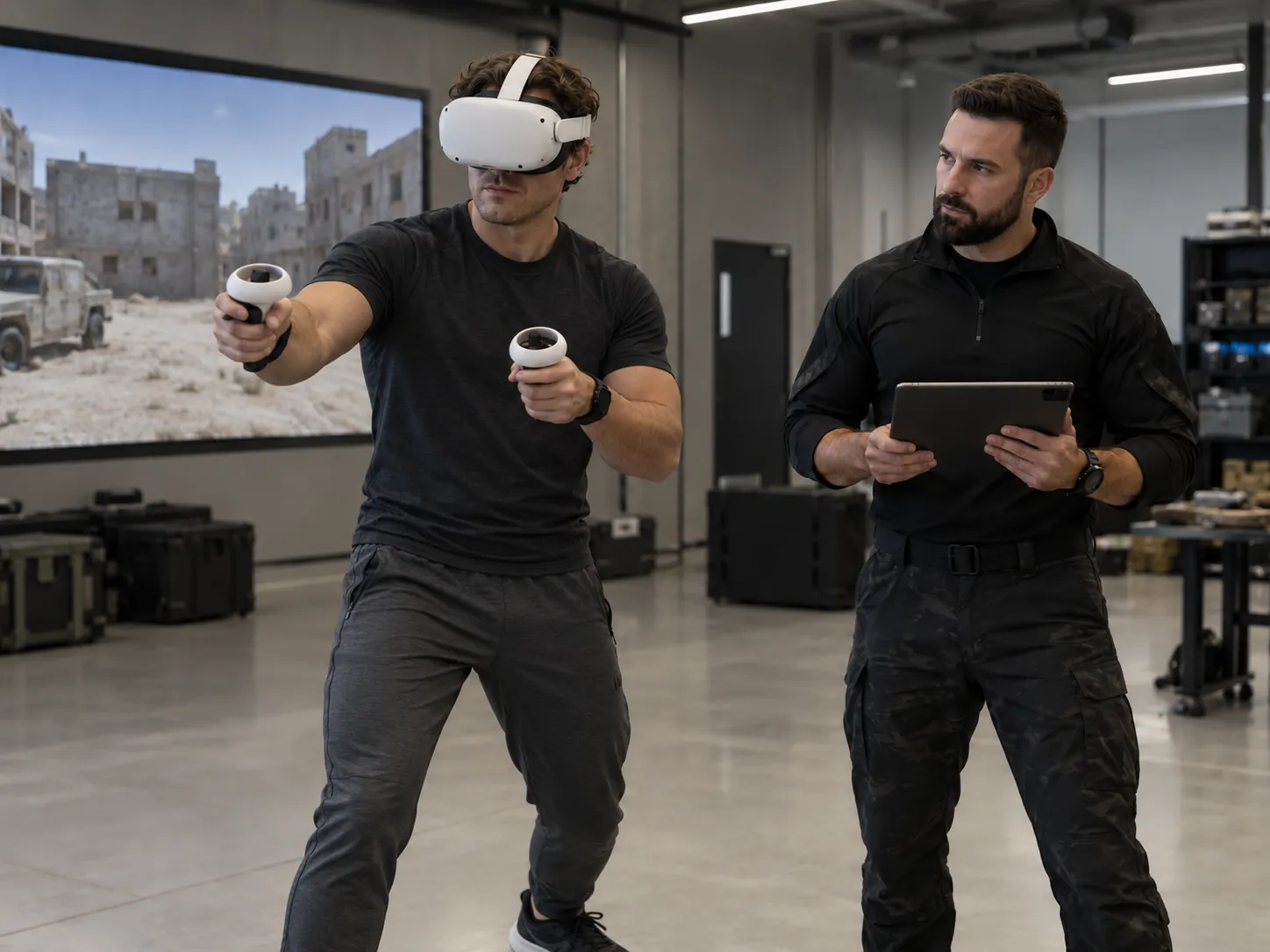
Tempest Tactics VR simulations give the instructor a central role. From a tablet app, the VR instructor manages the content and variations of each VR experience, creates customised exercises and reviews performance indicators and grades after every session.

Instructor holding a tablet supervises a trainee wearing a VR headset, with the simulated environment shown on a large screen behind them.
The VR instructor supervises the session from the app.

01

Supervised learning

The instructor stays beside the trainee throughout the exercise, following it from the app and a shared display.

From the app, the instructor manages which content runs and which variations are active, and adjusts the session as it unfolds. Training is guided by a person, not left to the software.

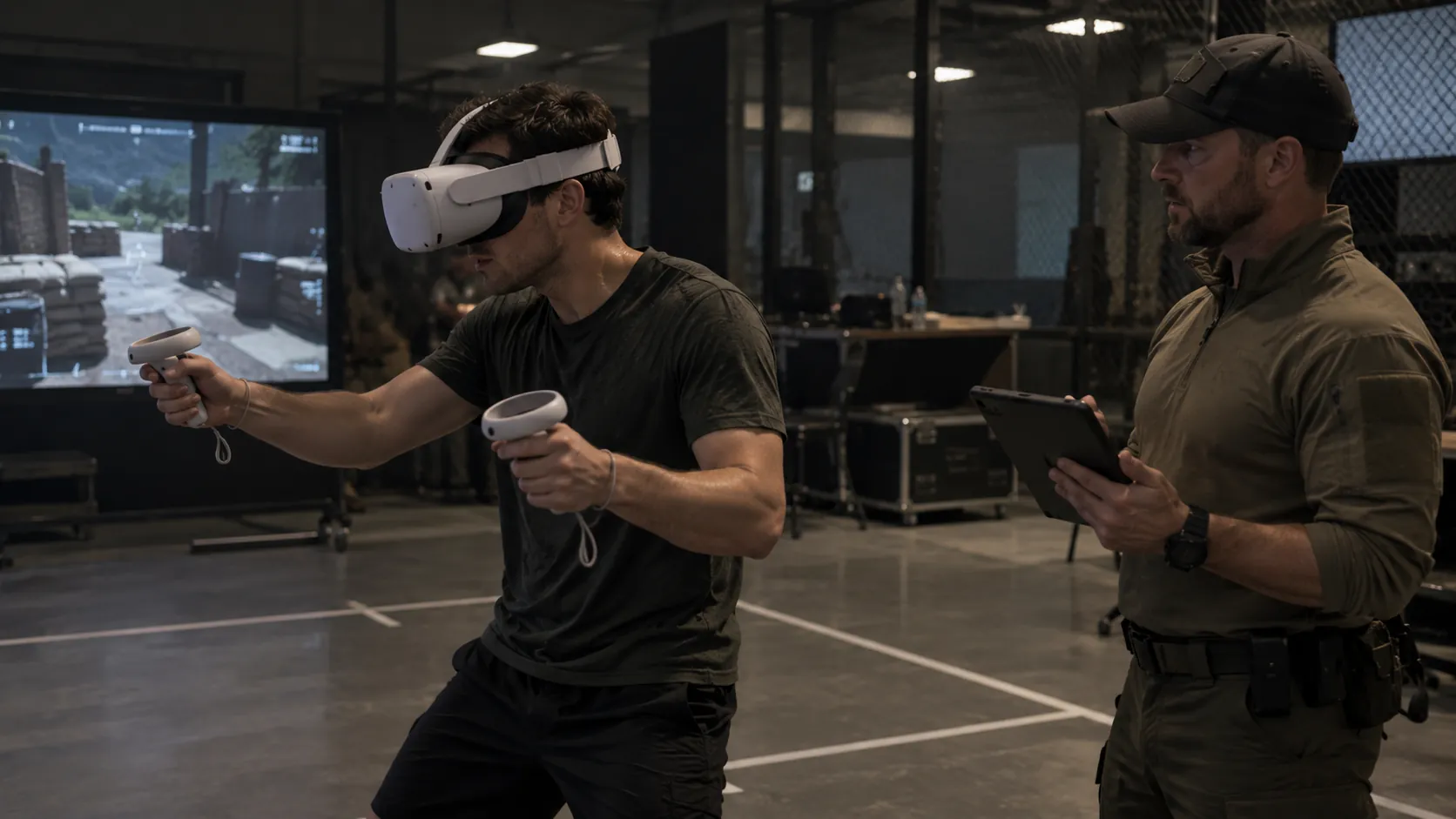
Instructor with a tablet configuring an exercise while a trainee in a VR headset works through it, the simulated scene visible on a screen.
Exercises built and varied by the instructor.

02

Instructor-customised exercises

With the exercise variation system, the instructor creates customised experiences: choosing the scenario and changing conditions, actors and events.

Each trainee can face the situations they most need to practise, and the same environment never has to play out the same way twice.

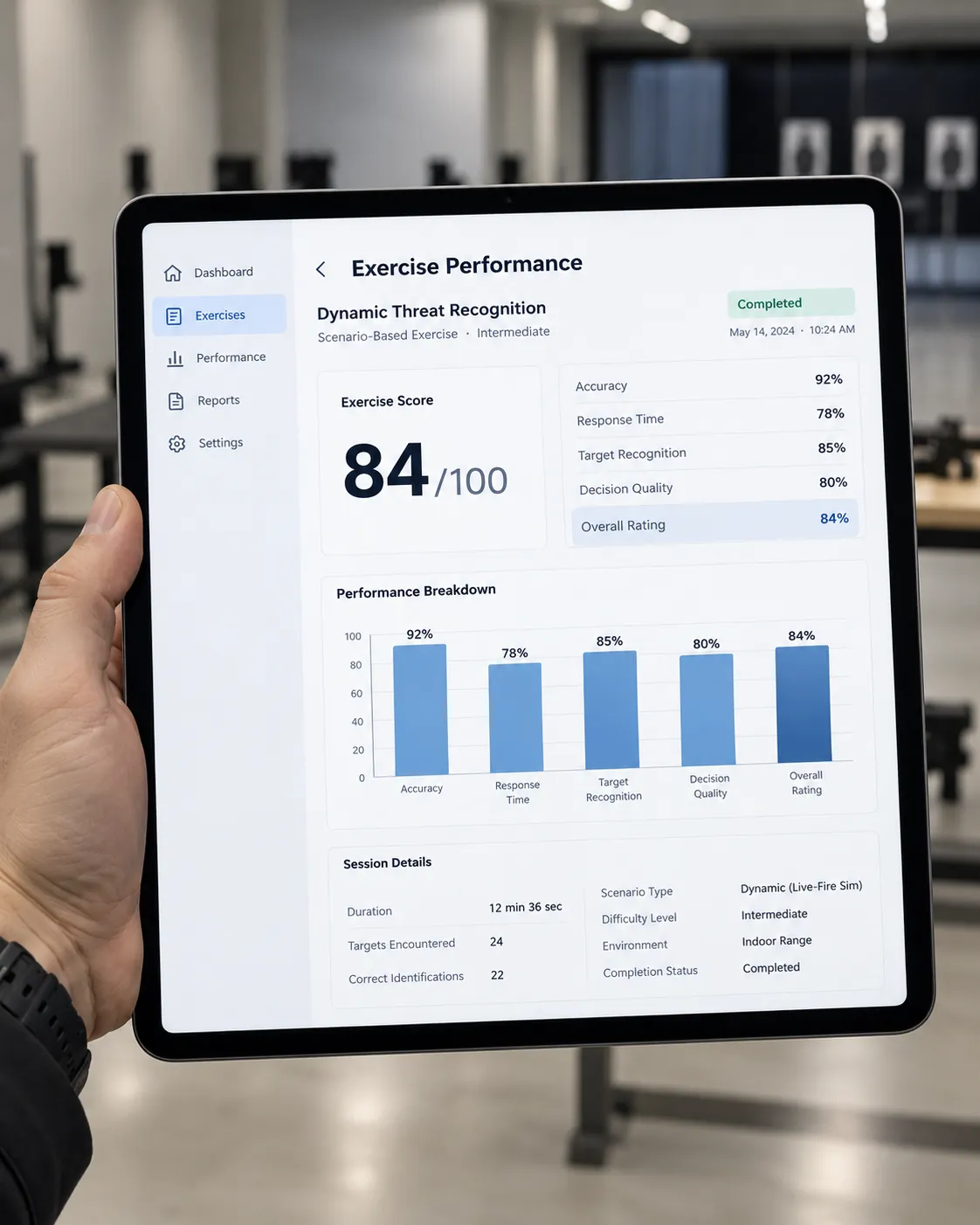
Tablet showing the instructor app's exercise performance screen: an overall score out of 100, indicator percentages, a bar chart and session details.
Example app screen. Indicators and values shown are illustrative.

03

Performance indicators and grades

After each exercise, the app returns performance indicators and a grade for the trainee, for example accuracy, response time, recognition and decision quality.

The instructor can see which areas need more work and build the next exercise around them.

System features

What the simulator includes

  • VR instructor app

    Manage content and variations, create customised exercises and review performance indicators and grades.

  • Scenario variation

    The same environment can present a different situation on each run.

  • Instructor control

    Set up the scenario, change conditions during the run and observe every trainee.

  • After-action review

    Sessions can be recorded and replayed for a structured debrief.

  • Multi-user

    Several trainees or teams can share one scenario.

  • Hardware integration

    Physical controls and custom devices can be connected to the simulator.

  • Display options

    Desktop, multi-screen or VR, chosen for the task and the training space.

  • Built on Unity 6

    Real-time 3D environments on a current, widely supported engine.

Tailored solutions

Tailored to your organisation

Tempest Tactics works with public and private entities, and each simulator is tailored to the organisation that will train on it.

  • Your environments: buildings, vehicles, terrain
  • Your procedures and rules of engagement for the exercise
  • Your team structures and roles
  • Replica equipment and physical controls
  • Interface language and terminology

Public entities

  • Armed forces
  • Police tactical and intervention units
  • Military academies
  • Training centres

Private entities

  • Defence contractors
  • Private security training providers
  • Systems integrators

Combat Tactics Simulator: questions

What can the VR instructor do in the app?
Manage the content and variations of the VR experience, create customised exercises with the exercise variation system, and review each trainee's performance indicators and grades to decide which areas to work on next.
What is a combat tactics simulator?
A simulator in which individuals and teams practise tactical procedures and decision-making in virtual environments, from range drills to complex scenarios.
Why vary scenarios between runs?
So trainees respond to the situation in front of them rather than a sequence they have memorised. See Adaptive Scenario Training.
Can teams train together?
Yes. Scenarios can be multi-user, with several trainees and an instructor in the same session.
Which engine is it built on?
The Combat Tactics Simulator is built on Unity 6.
Who is it for?
Public bodies such as armed forces, police units and academies, and private organisations such as defence contractors and security training providers.

Request a tailored Combat Tactics simulator